PRANAYAMA
the art of breathing
"There is no Yoga without breath. Before there is Asana, before there is Flow, before there is Progress – there is Breath."
Pranayama is the practice of working consciously with the breath to influence your body, mind and energy. Through simple yet powerful techniques, you learn to observe, regulate and expand your breathing patterns. The breath becomes a bridge between the physical body and the inner world, helping to calm the mind, balance the nervous system and create a deeper sense of presence. With consistent practice, pranayama can support emotional stability, increase vitality and open the door to a more refined and aware experience of your practice.
Pranayama: The Art and Science of Expanding Vital Energy
Pranayama is one of the most powerful and transformative tools offered by the ancient tradition of yoga. While it is often translated simply as breathing exercises, its meaning in Sanskrit reveals a much deeper dimension. The word is composed of prana, which represents vital energy or the cosmic force that animates every living being, and ayama, which means expansion, extension, or liberation. Therefore, the practice of pranayama is not solely about moving air in and out of the lungs, but about deliberately expanding our vital force to harmonize the body, mind, and spirit. This discipline acts as a direct bridge between our physical existence and our highest states of consciousness, allowing us to take charge of internal processes that usually escape our voluntary control.
From a spiritual and energetic perspective, ancient yoga texts describe the human body as a complex network of energy channels known as nadis. When prana flows freely through these channels, we experience vitality, peace of mind, and a deep connection with our environment. However, daily stress, emotional traumas, and sedentary lifestyles generate blocks in this network. The consistent practice of specific breathing techniques cleanses and unblocks these channels, allowing energy to circulate optimally once again. By mastering the breath, the practitioner learns to quiet the fluctuations of the mind, facilitating access to deep states of meditation and promoting an unwavering sense of presence and spiritual awakening.
Beyond its undeniable mystical dimension, modern science has begun to enthusiastically validate what yogis have known intuitively for thousands of years. From a therapeutic and physiological standpoint, pranayama exerts a direct influence on the autonomic nervous system. In today’s society, most people live in a constant state of hyperstimulation, which keeps the sympathetic nervous system active, responsible for the fight-or-flight response. This translates into chronically elevated cortisol levels, muscle tension, and anxiety. By practicing slow, deep, and diaphragmatic breaths, we stimulate the vagus nerve and activate the parasympathetic nervous system, which is responsible for relaxation, digestion, and cellular regeneration. Science proves that this immediately reduces the heart rate, lowers blood pressure, and mitigates the biological markers of stress.
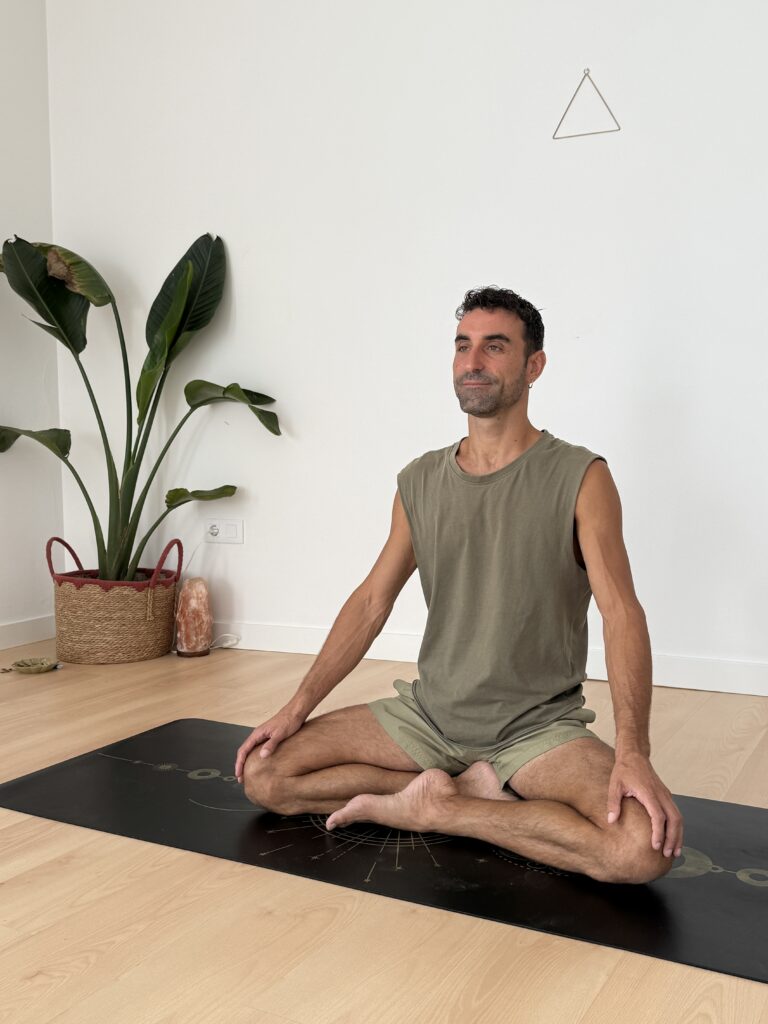
For athletes and high-performance individuals, pranayama offers a secondary but vital training ground to improve lung capacity and endurance. By learning to utilize our entire lung capacity, we optimize the gas exchange in the alveoli, resulting in better oxygenation of the blood and muscle tissues. Techniques involving controlled breath holds help the body adapt to higher levels of carbon dioxide, improving aerobic efficiency and delaying the onset of fatigue. Furthermore, breath control teaches athletes to maintain calm under pressure and conserve mental energy, which makes a substantial difference in the most demanding moments of competition or training.
In the realm of mental and emotional health, pranayama positions itself as a first-line therapy that is freely accessible and without side effects. The breath is the only function of the autonomic nervous system that we can control consciously. By voluntarily changing the rhythm of our breath, we directly change our emotional state. Prolonged exhalation techniques are excellent for dissolving panic attacks and reducing mental rumination, while energizing breathing techniques can combat states of lethargy or mild depression. This practice returns autonomy over our well-being to us, reminding us that we always carry the necessary medicine to restore our own internal balance.
Integrating pranayama into daily life does not require hours of isolation or special conditions; just a few minutes a day are enough to begin perceiving its profound benefits in the body and mind. As we sit in silence and connect with the rhythm of our own life, we honor a practice that is both a spiritual art and an exact science of health.
Yogic Breath or Full Yogic Breathing
This is the fundamental practice that every seeker must master before moving on to more complex techniques. It consists of maximizing the use of the lungs by dividing the inhalation into three distinct parts: abdominal or low breathing, thoracic or mid breathing, and clavicular or high breathing. By unifying these three zones into a single continuous and fluid flow, the practitioner achieves optimal blood oxygenation and a deep pacification of the mind. From a therapeutic standpoint, it re-educates the diaphragm and breaks the harmful pattern of shallow breathing that we usually adopt unconsciously when suffering from stress or anxiety.
Ujjayi Pranayama or Victorious Breath
Frequently known as the ocean breath because of the soft murmur it produces, this technique is performed by slightly contracting the glottis at the back of the throat during both inhalation and exhalation through the nose. Spiritually, this internal sound acts as an anchor for the mind, helping to maintain a state of moving meditation. Scientifically, the slight resistance opposed to the passage of air generates internal heat, improves cellular oxygenation, and strongly stimulates the vagus nerve. It is the technique par excellence for athletes during their training and physical yoga practitioners looking to sustain endurance and mental focus under effort.
Kapalbhati or Skull Shining Breath
Translated literally as skull shining, this purification technique is characterized by fast, short, and energetic exhalations generated from the abdomen, followed by completely passive and automatic inhalations. On the energetic and spiritual plane, Kapalbhati rapidly clears blocks in the lower nadis and awakens an immense latent vitality. At a clinical and sporting level, it is highly effective for detoxifying the respiratory tract, activating the basal metabolism, massaging visceral organs, and training the strength of the abdominal wall muscles.
Bhastrika or Bellows Breath
Unlike the previous technique, in Bhastrika both the inhalation and exhalation are performed forcefully, rhythmically, and vigorously, mimicking the movement of a bellows used by a blacksmith to stoke a fire. This is a highly energizing exercise that produces a massive entry of oxygen and activates the nerve centers. Spiritually, it is used to ignite digestive fire and purify the nervous system of dense physical and mental impurities. For the athlete, it functions as a powerful trigger for energy and body heat right before starting a high-performance physical session.
Chit Shakti Prakriya Pranayama or Energy & Consciousness Awakening Breath
This dynamic breathing technique integrates the fluid movement of the arms with a rhythmic and deep nasal breath. By raising the arms on the inhale and pulling them down energetically on the exhale with closed fists, it not only mechanically expands the rib cage but also consciously activates blood flow toward the cardiovascular centers. It is an ideal practice to transmute physical lethargy into active vitality. Its primary therapeutic value lies in its capacity to break the inertia of accumulated stress and instantly stabilize the fluctuations of the autonomic nervous system.
Nadi Shodhana or Anulom Vilom (Alternate Nostril Breathing)
Sheetali Pranayama or Cooling Breath
To perform this technique, the practitioner curls the tongue into a tube shape and inhales air slowly through it, then closes the mouth and exhales pauses through the nostrils. The spiritual and physical effect of Sheetali is one of absolute calm and coolness. It is the ideal antidote to reduce excess heat in the body, mitigate anger, soothe intense emotional agitation, and lower blood pressure. At a therapeutic level, scientists associate it with the ability to rapidly induce alpha brain waves linked to deep relaxation.
Bhramari Pranayama or Humming Bee Breath
This beautiful technique consists of taking a deep inhalation and, during a slow and prolonged exhalation, emitting a soft and constant hum at the back of the throat, similar to the sound of a bee. To enhance its effect, the ears and eyes are usually gently covered with the fingers. The physical vibration produced by this sound resonates directly in the skull and the central nervous system. It is one of the most powerful yoga therapies to dissolve chronic insomnia, shut down obsessive mental noise, drastically reduce stress levels, and submerge consciousness in a state of profound spiritual peace.
The Pranayama Program: From Conscious Breathing to Vital Mastery
This program is designed to guide you in the discovery of your own breath, understanding it not just as a mechanical act, but as the master key to transforming your physical and mental health. Throughout our training, we will approach pranayama from a triple perspective that unites traditional spiritual wisdom with the discoveries of science and modern physiology.
From a scientific and therapeutic standpoint, the fundamental pillar of this program lies in understanding oxygen as the primary and most essential nutrient for human life. We can survive weeks without food and days without water, but barely a few minutes without oxygen. Every single cell in our body depends on this gas to produce adenosine triphosphate, the energy currency that powers absolutely all of our biological processes. When we breathe shallowly and automatically due to chronic stress, we deprive our organism of its optimal fuel. Through the pranayama techniques you will learn, we will optimize pulmonary ventilation and gas exchange, ensuring that this vital nutrient reaches every corner of your body efficiently.
This superior utilization of oxygen has a direct and measurable impact on our metabolism and the nervous system. By mastering different breathing rhythms, we manage to influence the balance between the sympathetic and parasympathetic nervous systems at will. The practices we will perform will act as a balm for an overstimulated nervous system, immediately reducing the production of stress hormones and allowing the body to enter a state of repair, digestion, and deep calm. Metabolically, correct cellular oxygenation improves fat burning, increases overall cellular vitality, stabilizes blood pH, and delays muscle fatigue—something of vital importance both for daily life and for athletes looking to elevate their physical performance naturally and sustainably.
Beyond the undeniable clinical and biological benefits, pranayama fulfills a transcendental function on the spiritual path of yoga: it serves as the indispensable bridge and the most practical step toward concentration and deep meditation. In classic texts, it is said that when the breath is agitated, the mind is agitated, and when the breath is calm, the mind is also calm. It is very difficult to sit down and meditate directly when the brain is flooded with chaotic thoughts.
Pranayama offers us a tangible and physical object of focus. By absorbing the mind in the rhythmic control of the air, intrusive thoughts dissolve naturally, attention pulls inward, and the state of clarity necessary for meditation to occur spontaneously and effortlessly is generated.
How My Sessions Work and Methodology
To ensure you integrate this knowledge safely and sustainably, I have structured the program in a completely practical, dynamic way adapted to each individual.
Each class has a duration of between 45 and 60 minutes, the perfect amount of time to deepen the technique without creating fatigue in the nervous system. In these classes, we will learn all the techniques mentioned above progressively, starting from the most subtle foundations like the full yogic breath and building up to the more advanced and energizing exercises of breath retention.
This is an ongoing learning program built on constant practice. As your instructor, my fundamental role will be to serve as a constant guide and direct supervisor of your technique.
Breathing and the management of internal energy require a careful external eye to correct postural habits, unnecessary tension in the throat, or forced rhythms. Given that lung capacity and energetic sensitivity vary greatly from person to person, each student will follow an individualized learning pace, depending on their level of practice and their own biological evolution. There is no rush and no external goals to achieve; the only objective is your own internal connection.
For more information, you can request it by contacting me via WhatsApp.
Pranayama Program
- 🎯 The Ultimate Nutrient: Maximize your oxygen intake to fuel every cell and optimize your biology.
- 🧠 Nervous System Reset: Switch off your fight-or-flight response and trigger deep physiological relaxation.
- 🔥 Metabolic & Athletic Boost: Improve your lung capacity, delay fatigue, and increase cellular energy.
- 🧘 Bridge to Meditation: Calm your mind's chaos naturally by focusing on controlled breathing.
- ⏱️ Class Duration: 45 to 60 minutes per session of pure practice and guidance.
- 📈 Tailored Progress: Learn step-by-step at your own individual pace.
- 👥 Expert Guidance: Live supervision to correct your posture, technique, and rhythms.
SIGN UPINFO